

|
Natural Systems
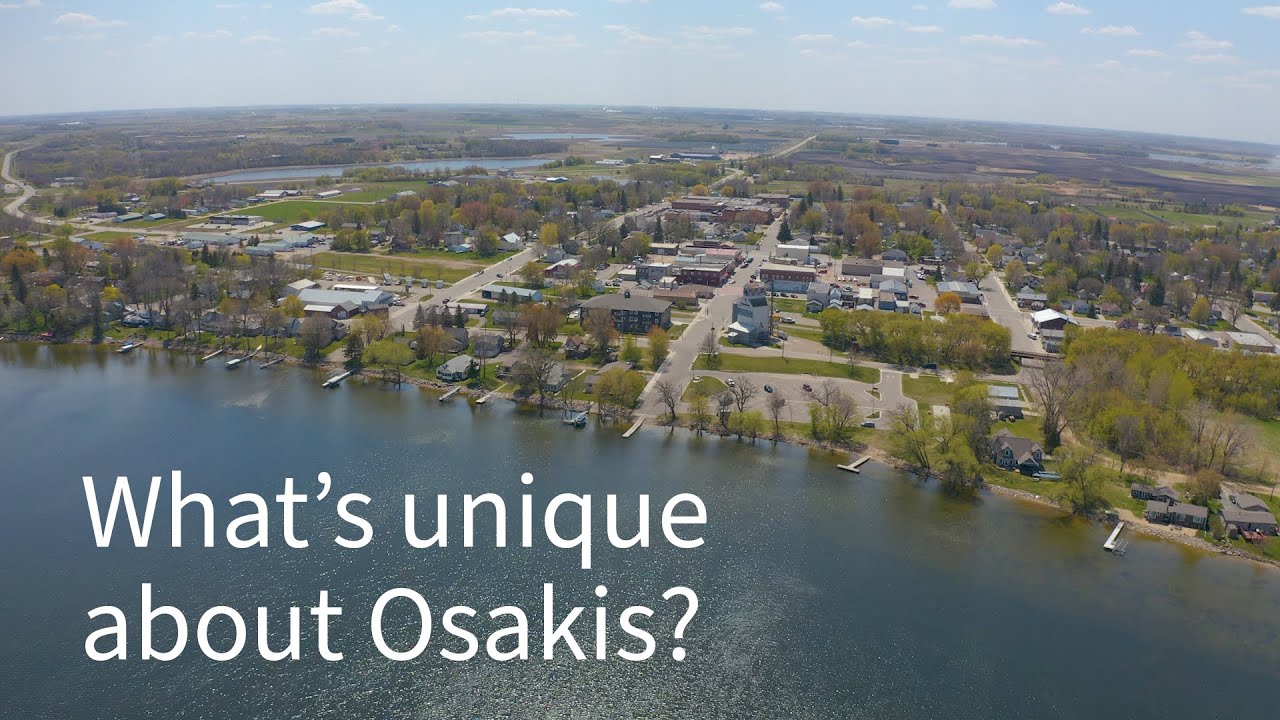
The natural features around Osakis help define the identity of
the town. The wetlands, rivers and, of course, Lake Osakis
itself-all are vital to Osakis' tourist economy. They provide
opportunities for recreation, support a variety of wildlife and
filter storm water runoff from naturally occurring structures
and the built environment.
Preservation and restoration of these natural systems is
crucial. Conservation easements can be placed to protect
waterways from human- and naturally induced harm. Natural
systems can be used to guide the pattern of new development;
wetlands and drainage corridors can be used for lower-impact
uses such as trails, wildlife observation and other recreation.
Downtown Core
The downtown core is the heart of Osakis-its civic, economic,
cultural and social center. It should be a magnet to residents
and visitors alike.
How to accomplish this? Revitalize the center of downtown and
bring more focus to the lake access area, specifically, the
waterfront and Osakis Pier. Draw residents from the north end of
the lake, via private watercraft and a new water taxi. Reclaim
and humanize the downtown public realm by adding green space and
consistent yet unique sidewalk covers, such as awnings.
Containers-replete with the Osakis logo-should occupy the
sidewalks and intersection edges.
Create more opportunities for parking, including small-scale
parking facilities. Capitalize on bike traffic by locating a
bike trailhead at downtown. A motel/conference center will
provide lodging for out-of-towners and a pleasant place for
local businesspeople to meet. These guidelines will help Osakis
become an urban oasis in a phenomenal natural environment.
Comprehensive Plan/Ordinances
A comprehensive plan will provide a guiding vision for Osakis.
Created by the community, it will set out a direction for Osakis
to pursue, and show how and when the community will "arrive" at
its goals. As the community works to prepare a comprehensive
plan, it will strengthen its identity and build pride in its
future.
Ordinances, such as zoning and subdivision codes, come after
the creation of the comprehensive plan. Zoning ordinances are
important because they provide for the orderly development of
the community in a way that is consistent with the larger goals
and principles set forth in the comprehensive plan. A zoning
ordinance is the primary tool that helps individual property
owners maximize and protect the value of their properties and
important environmental assets. A subdivision ordinance
specifically addresses the layout of high-quality, new
neighborhoods.
Osakis should prepare a new comprehensive plan, revise its
zoning ordinance and prepare a subdivision ordinance.
Recommended zoning ordinance changes include:
- Prepare specific development standards, based on an
overriding design framework, that go beyond land use to better
address building placement, design, building materials,
signage, scale and density.
- Make finer distinctions between zoning districts so that
permitted land uses are better tied to district character.
Introduce development standards.
- More specifically address the form of new development.
- Create a downtown zoning district.
Transportation
Some of the city's transportation avenues need to grow and
expand as Osakis grows. Other streets need to support the
small-town character of the community. Without access, and easy
circulation of traffic, Osakis will not thrive.
The community's immediate priority should be to ensure access
and visibility for local businesses while highway construction
is under way. In the longer term, the city should decide how to
handle traffic flow and retail traffic parking as the city
grows. Osakis has limited street types, which need to be
modified to accommodate the needs of the neighborhoods they
serve.
Regulations and ordinances need to be changed to accommodate
the community's transportation goals. For example, truck routes
that won't interfere with tourist traffic need to be identified.
A transportation policy plan that reviews all traffic types on
different streets, eliminates conflict between traffic types and
allows for all modes of travel (pedestrians, bikes, cars,
trucks) is needed.
New Development Growth Patterns
Osakis has great growth potential, but it needs to envision a
wise path to follow, one that will provide an economically
feasible pattern, while offering a variety of the housing types
that new residents will need in the future-a diversity of
housing choices based on affordability and stylistic
preferences. A more efficient use of land will include more
contiguous, common open space, as well as a variety of lot
sizes, which will allow for greater density and cost-effective
growth. Infrastructure savings will be significant; builder and
developer profits and, by extension, the city's tax base will be
more favorable than a conventional development pattern.
After the creation of a viable industrial park, the next
logical step is the creation of new neighborhoods-an extension
of the existing phase one and phase two residential
developments. First, the zoning and subdivision ordinances need
to be amended to allow for more small-lot development and a mix
of land uses. The Economic Development Corporation can play the
same pivotal role as they did with the industrial park: They can
set up the framework (platting), then encourage builders to come
in and build. There are building types available that are
appropriate for these types of developments. All that a project
of this type needs is an element that already exists: the will
to succeed.
The Osakis Chamber of Commerce thanks the following for
their generous financial support:
City of Osakis
Osakis Economic Development Corporation
Veterans of Foreign Wars, Post #7902, Osakis
First National Bank of Osakis
For more information, contact:
Osakis Chamber of Commerce
320.859.3777
osakis@midwestinfo.net
Laura Backes, Design Team Committee chair
320.859.5563
otv@midwestinfo.net
The Minnesota Design Team
Rich McLaughlin (team leader)
Harold Skjelbostad (team leader)
Diana Billings
Jeff Feulner
Roger Germann
Jennifer Hawkins
Stephanie Howe
Mike Jischke
Monique MacKenzie
Jason Miller
Peter Musty
Mark Nolan
Lucy Thompson
Tom Van De Weghe
Scott Yonke
Visit the Minnesota Design Team online at
www.minnesotadesignteam.org. |